
Ein Beitrag von Helen Schindler und Theresa Scheutzow auf Basis des Interviews mit Ren Loren Britton
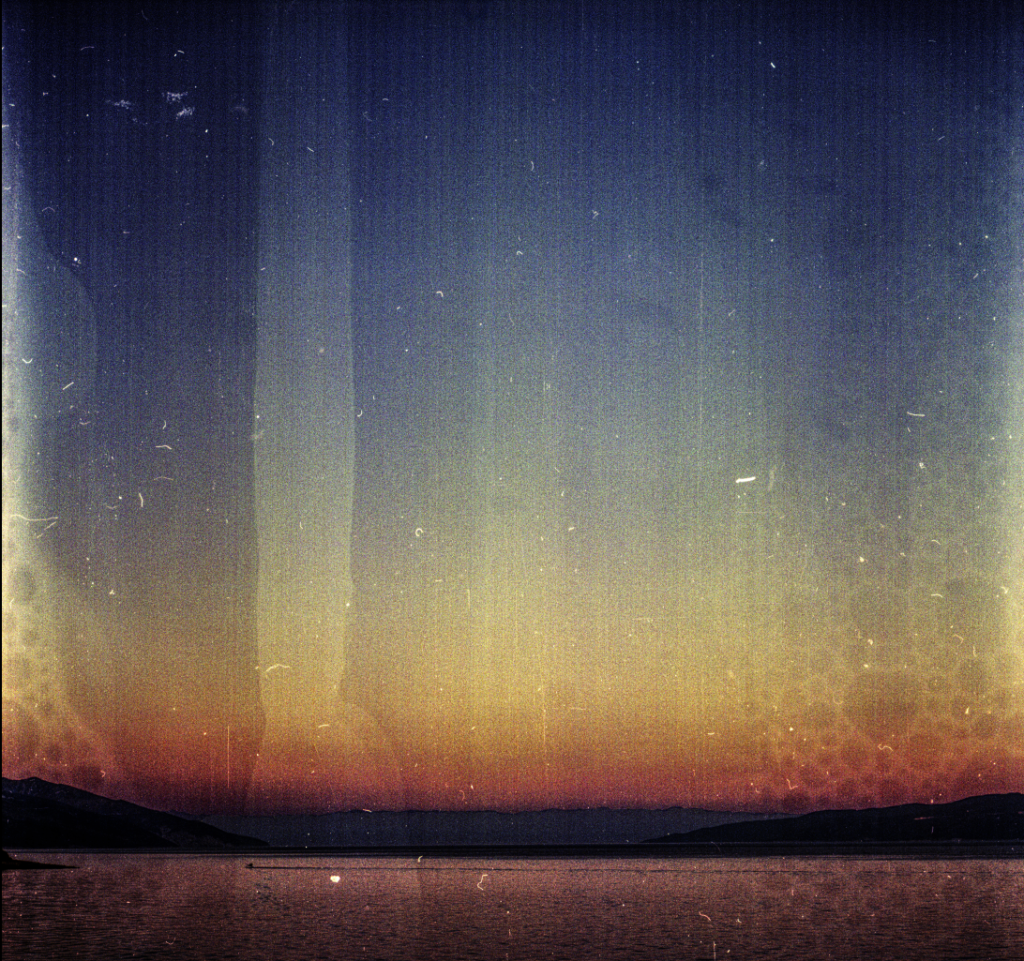
In einer Gesellschaft, die oft von ausschließenden Erzählungen und ableistischen Strukturen geprägt ist, lädt Künstler Ren Loren Britton dazu ein, den Blick neu auf unsere gemeinsamen Realitäten und den Himmel über uns zu richten. Britton geht mit seiner Arbeit davon aus, dass wir in einer zutiefst ableistischen und von weißer Vorherrschaft geprägten Welt leben und fordert uns in einer ermutigenden Weise auf, neu zu überdenken, wie wir in einer Gesellschaft zusammenleben wollen.
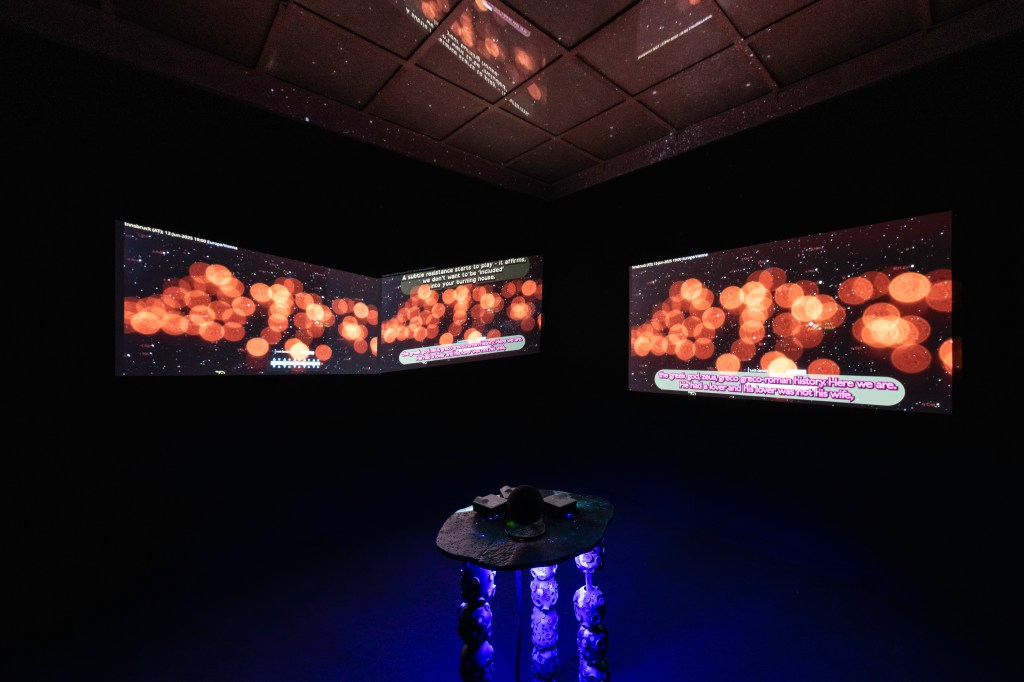
Die aktuelle Installation von Ren Loren Britton, „Coalition Constellation: Constellating Reparations“, ist ein abschließendes Werk der Fellowship im Künstler:innenBüchsenhausen und lädt Besucher*innen ein, in andere Räume einzutauchen. Der abgedunkelte Raum in der Ausstellung fühlt sich an wie eine andere, reale Welt und stellt die Besucher*innen vor viele Fragen. Im Herzen des Raums befindet sich der „Dreaming Table“, eine skulpturale Installation, deren Beine an Maschinen aus Planetarien erinnern und die Projektoren tragen. In die Tischplatte sind Sterne gebohrt, die den Himmel vom 24. April 2023 abbilden – ein Datum, das in Brittons Videoarbeit eine wichtige Rolle spielt. Es ist der Zeitpunkt des entscheidenden Gesprächs zwischen Ren Loren Britton, SchwarzRund und dem Aktivisten Udo Sierck aus der Behindertenrechtsbewegung.
Vor den Besucher*innen entfaltet nun ein dreikanaliges Video von etwa 26 Minuten Dauer verschiedene Narrative: Es behandelt die Geschichte der Disability Crip-Bewegung in Deutschland, kritisiert die westliche Wissenschaft, beleuchtet Transfeminismus und Gerechtigkeit.
Die Wirkung der Ausstellung ist ein selbstermächtigenden Gefühl und Optimismus. Die künstlerische Arbeit schlägt vor, unsere Sterne neu zu benennen. Nach den Werten, die wir uns am Himmel wünschen: Geschichten von Menschen mit Behinderung, queeren Menschen, Feminist*innen und Transfeminist*innen. Es sollen kleine, scheinbar unspektakuläre Geschichten erzählt werden, die von Menschen berichten, die sich zusammengefunden und ihre Bedürfnisse erfüllt haben.
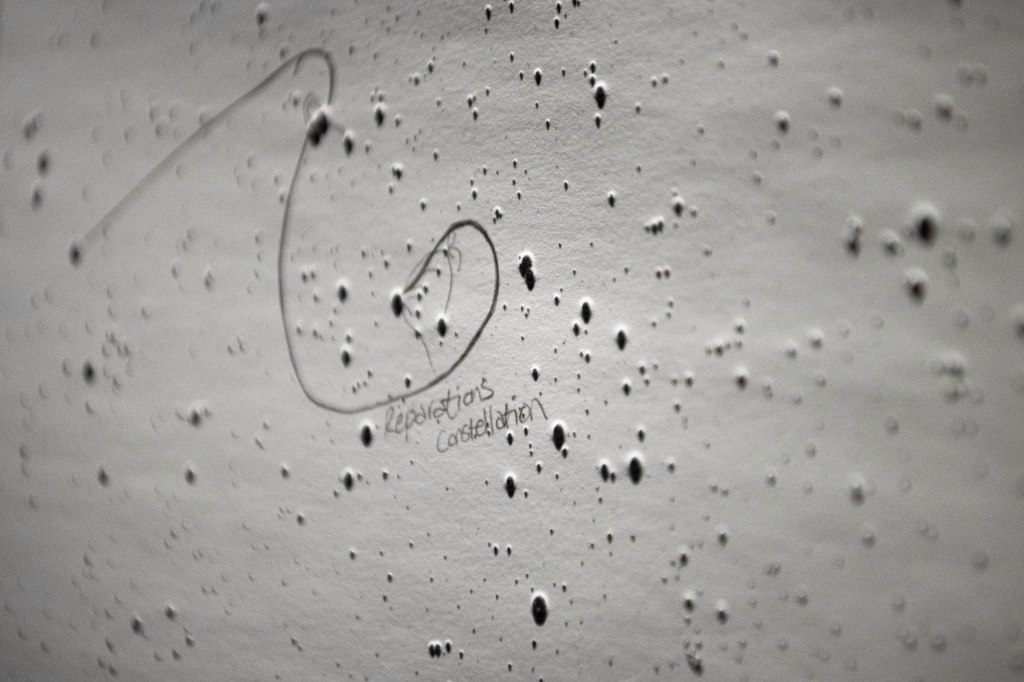
Ein weiteres zentrales Element ist die taktile Sternkarte, die blinden und sehbehinderten Besucher*innen ermöglicht, die Sterne physisch zu ertasten. Diese Karte zeigt die Sterne über Innsbruck von Juni bis September – der Dauer der Ausstellung. Die Ausstellung zeigt, wie Barrierefreiheit funktionieren kann und ermächtigt damit umso mehr alle Besucher*innen. Britton will alternative Wissensformen jenseits von Sehen und Hören erforschen. Bei seiner Arbeit zur Audiodeskription für höreingeschränkte Menschen ließ er sich von Christine Sun Kim inspirieren. Die Videoinstallation selbst bietet vielfältige Zugangsoptionen, sie ist in Englisch mit Audiodeskription und Untertiteln sowie in Deutsch verfügbar. Eine Online-Zugangsversion ist ebenfalls vorhanden. Britton betont, dass diese Mehrperspektivität bewusst gewählt wurde, um die Annahme einer nicht-behinderten Betrachter*innenschaft aufzubrechen und zu zeigen, wie Zugang vielfältig gestaltet werden kann.
Kunst als Katalysator für Wandel
Die zentrale Botschaft der Arbeit ist das Hinterfragen westlicher Wissensparadigmen und kolonialer Erzählungen, die oft maskulinistische und heroische Geschichten fokussieren. Für Britton ist die Rolle der Kunst, wie die Schwarze Feministin und Dichterin Toni Cade Bambara sagte, „die Revolution unwiderstehlich zu machen“. Kunst soll mutige Imaginationen hervorbringen, Zeugnis neuen Wissens oder Geschichte sein. Britton kritisiert offen die weiße Vorherrschaft als koloniale Kontinuität. Diese wird durch Gesetze und Politikstrukturen, wie Redlining, Gentrifizierung, Migrationspolitik und Angriffe auf Transmenschen verankert. Menschen werden diskriminiert, die nicht den Normen von Nicht-Behinderung, Cisgender, Weißsein und westlicher Lebensweise entsprechen.
Ein zentraler Aspekt von Brittons Arbeit ist deshalb das Nachdenken über das Rechtssystem und wie es sich im Laufe der Geschichte verändert hat, insbesondere im Kontext des Dritten Reiches. Britton fragt kritisch nach, wer vom Recht geschützt wird und wer nicht, über die historische Entwicklung hinweg. Britton untersucht die Härtefallgesetze in Deutschland von 1982, die eine Reparationszahlung an Menschen mit Behinderung, jüdische, Rom*nja, Sinti*zze und homosexuelle Gemeinschaften nach dem Holocaust vorsahen. Obwohl dies ein „koalitionärer Erfolg“ war, der zeigte, wie marginalisierte Gruppen zusammenarbeiten konnten, führte die geringe finanzielle Entschädigung nicht zu einer strukturellen Transformation oder nachhaltigen Verbesserung für zukünftige Generationen.
Britton spricht über Siedler-Kolonialismus, der durch aktive Landnahme und die Entziehung von Lebenschancen gekennzeichnet ist, wie etwa im Kontext des atlantischen Sklavenhandels und des Völkermords an Indigenen in den USA. Brittons Film stellt die Frage, wie mit dieser globalen „kolonialen Wunde“ umgegangen werden kann und andere, plurale Möglichkeiten geschaffen werden können.
Verbindung als Utopie: Gemeinsam in die Zukunft
Britton betont die Bedeutung von Verbindungspunkten als Modell für breitere gesellschaftliche Transformation. Angesichts des globalen Aufstiegs von Faschismen und Kriegen sieht er die dringende Notwendigkeit, über Zusammenarbeit trotz Differenzen nachzudenken und sich nicht in „Single-Issue-Politiken“ zu verlieren. Das Projekt „Coalition Storytelling“ sucht aktiv nach Momenten, in denen marginalisierte Gruppen erfolgreich zusammengearbeitet haben, um zu zeigen, dass gemeinsame Siege möglich sind. Brittons Arbeit fordert uns auf, die Geschichte zu nutzen, um die Zukunft anders zu denken und neue Konstellationen zu imaginieren.
Ren Loren Britton hofft, dass Besucher*innen der Ausstellung mit dem Gefühl gestärkter Handlungsfähigkeit und Verbundenheit verlassen – dem Gefühl, dass sie „etwas tun können“.
Kontakt & laufende Aussstellung
Interessierte können Ren Loren Britton über die Website https://lorenbritton.com/ kontaktieren oder dem Instagram-Kanal @brittonstudio folgen. Die Ausstellung „Tellurian Skies: Casting Acts of Solidarity, Liberation and Desire in Times of Collapse“ mit Ren Loren Britton, Kris Dittel, Felix Kalmenson und muSa mattiuzzi ist derzeit im Kunstpavillon im Hofgarten Innsbruck zu sehen: https://www.buchsenhausen.at/en/event/tellurian-skies-casting-acts-of-solidarity-liberation-and-desire-in-times-of-collapse/
Der Artikel basiert auf einem Interview von Theresa Scheutzow und Helen Schindler mit Ren Loren Britton – Wir bedanken uns herzlich für die Zeit und das inspirierende Gespräch!
Nachruf – Eine Anmerkung von Ren Loren Britton
Dieser schöne und verbindende Artikel (vielen Dank, Helen und Theresa) wurde in den Tagen nach dem viel zu frühen und herzzerreißenden Tod von Andrei Siclodi fertiggestellt, dem Direktor des Künstler:innenhaus Büchsenhausen und Kurator von „Tellurian Skies: Casting Acts of Solidarity, Liberation and Desire in Times of Collapse”, wo dieses Werk derzeit zu sehen ist. Allen Lesern, die Andrei kannten, möchte ich sagen, dass ich mit Ihnen gemeinsam um diesen großartigen Menschen trauere. Eine Liste aller Eigenschaften von Andrei zu erstellen, um Zeugnis von seiner Großzügigkeit abzulegen, würde Sie und mich den ganzen Tag lang lesen lassen. Deshalb möchte ich ihm und der Gemeinschaft um ihn herum vorerst nur meine aufrichtige Dankbarkeit aussprechen – und den Wunsch weitergeben, den Andrei mir kurz vor seinem Tod mit auf den Weg gegeben hat: Pass auf dich auf, genieße dein Leben und folge deinen Träumen so gut du kannst.
English version
Art as a catalyst for change – Thinking new constellations: Ren Loren Britton and colleagues at the Kunstpavillon Innsbruck
In a society often characterized by exclusionary narratives and ableist structures, artist Ren Loren Britton invites us to take a fresh look at our shared realities and the sky above us. Britton’s work assumes that we live in a deeply ableist and white supremacist world and encourages us to rethink how we want to live together in society.
Ren Loren Britton’s current installation, “Coalition Constellation: Constellating Reparations,” is a concluding work of their fellowship at Künstler:innenhaus Büchsenhausen and invites visitors to immerse themselves in other spaces. The darkened room in the exhibition feels like another, real world and presents visitors with many questions. At the heart of the room is the “Dreaming Table,” a sculptural installation whose legs are reminiscent of planetarium machines and which supports projectors. Stars are drilled into the tabletop, depicting the sky on April 24, 2023—a date that plays an important role in Britton’s video work. It is the time of the decisive conversation between Ren Loren Britton’s collaborator, SchwarzRund and the disabled activist Udo Sierck from the disability rights movement in Germany.
A three-channel video lasting around 26 minutes unfolds various narratives before visitors: it deals with the history of the disability crip movement in Germany, criticizes Western science, and highlights transfeminism and justice.
The exhibition leaves visitors feeling empowered and optimistic. The artwork suggests renaming our stars according to the values we want to see in the sky: stories of people with disabilities, queer people, feminists, and transfeminists. The aim is to tell small, seemingly unspectacular stories about people who have come together and fulfilled their needs.
Another central element is the tactile star map, which allows blind and visually impaired visitors to physically feel the stars. This map shows the stars above Innsbruck from June to September—the duration of the exhibition. The exhibition shows how accessibility can work, thereby empowering all visitors even more. Britton wants to explore alternative forms of knowledge beyond seeing and hearing. They are inspired by Christine Sun Kim in her work on audio description for D/deaf people. The video installation itself offers a variety of access options; it is available in English with audio description and subtitles, as well as both of the same in German. An online access copy to read asynchronously is also available.
Britton emphasizes that this multi-perspective approach was deliberately chosen to challenge the assumption of a non-disabled audience and to show how access can be designed in a variety of ways.
Art as a catalyst for change
The central message of the work is to question Western knowledge paradigms and colonial narratives, which often focus on masculinist and heroic stories. For Britton, the role of art, as Black feminist and poet Toni Cade Bambara said, is “to make the revolution irresistible.” Art should give rise to bold imaginations and bear witness to new knowledge or history. Britton openly criticizes white supremacy as colonial continuity. This is enshrined in laws and political structures such as redlining, gentrification, migration policy, and attacks on transgender people. People who do not conform to the norms of non-disability, cisgender, whiteness, and Western lifestyles are discriminated against.
A central aspect of Britton’s work is therefore to reflect on the legal system and how it has changed throughout history, especially in the context of the Third Reich. Britton critically questions who is protected by the law and who is not, throughout historical development. Britton examines the hardship laws in Germany from 1982, which provided for reparations payments to people with disabilities, Jewish, Romani, Sinti, and homosexual communities after the Holocaust. Although this was a “coalition success” that showed how marginalized groups could work together, the small financial compensation did not lead to structural transformation or sustainable improvement for future generations.
Britton talks about settler colonialism, which is characterized by active land grabbing and the deprivation of life chances, as in the context of the Atlantic slave trade and the genocide of indigenous peoples in the US. Britton’s film asks how this global “colonial wound” can be dealt with and how other, pluralistic possibilities can be created.
Connection as utopia: Together into the future
Britton emphasizes the importance of connection points as a model for broader social transformation. In light of the global rise of fascism and war, they see an urgent need to think about cooperation despite differences and not to get lost in “single-issue politics.” The Coalition Storytelling project actively seeks out moments when marginalized groups have successfully worked together to show that shared victories are possible. Britton’s work challenges us to use history to reimagine the future and imagine new constellations.
Ren Loren Britton hopes that visitors will leave their exhibition feeling empowered and connected—feeling that they “can do something.”
Contact & Current Exhibition
Those interested can contact Ren Loren Britton by checking out their website at: https://lorenbritton.com/ or follow their Instagram channel @brittonstudio.
The exhibition “Tellurian Skies: Casting Acts of Solidarity, Liberation and Desire in Times of Collapse” with Ren Loren Britton, Kris Dittel, Felix Kalmenson, and muSa mattiuzzi is currently on view at the Kunstpavillon im Hofgarten Innsbruck: https://www.buchsenhausen.at/en/event/tellurian-skies-casting-acts-of-solidarity-liberation-and-desire-in-times-of-collapse/
The article is based on an interview conducted by Theresa Scheutzow and Helen Schindler with Ren Loren Britton – we would like to express our sincere thanks for the time and the inspiring conversation!
Obituary – A note from Ren:
This beautiful and connecting article (thank you so much Helen & Theresa) was completed in the following days after the untimely and heartbreaking passing of Andrei Siclodi, the director of Künstler:innenhaus Büchsenhausen and the curator of “Tellurian Skies: Casting Acts of Solidarity, Liberation and Desire in Times of Collapse”, where this work is presently on view. For all readers who knew Andrei, I am with you in our shared grief over the massive loss of this beautiful person. Making a list of all of Andrei’s qualities to provide a testament to the magnanimous person he was would leave you and me reading a list all day long, so for now I wish to just express my sincere gratitude to him and the community around him — and to pass on the wish that Andrei said to me just before he passed: take care, enjoy your life and follow your dreams as good as you possibly can.

 FUQS
FUQS 